


Gear Racks
Your Professional Gear Racks Manufacturer!
Kunshan Devotec Automation Co., Ltd. was established in 2012, but its origins trace back to an initial investment by the German company WMH HERION in Qingdao, Shandong Province in 2007. Since then, we have accumulated extensive experience in engineering, manufacturing, and quality control. As a specialist in drive technology, Kunshan Devotec Automation focuses on the production of high-precision gear racks, gears, pinions, gearboxes, linear guideways, and other linear transmission components. The company also serves as a partner for several European manufacturers in China, including , Graessner, and Hönger, providing localized sales and after-sales services.
-
![Helical Teeth Ground Racks DIN5]() Helical Teeth Ground Racks DIN5These racks have excellent control over pitch errors, cumulative pitch errors, and geometric tolerances. The adjacent pitch error is usually very small, and the cumulative error is generally...read more
-
![Helical Teeth Ground Racks DIN6]() Helical Teeth Ground Racks DIN6DIN6 helical ground racks are corresponding to a medium-high precision level (total cumulative pitch error ≤0.036mm/m). This precision level balances cost-effectiveness and performance, making it...read more
-
![Custom Gear Rack For Linear Motion Systems]() Custom Gear Rack For Linear Motion SystemsEngineered for heavy-load and long-stroke linear axes, custom gear racks convert rotary drive torque from gearboxes and pinions into high-speed, precise linear displacement.read more
-
![Custom-Machined Gear Rack]() Custom-Machined Gear RackCustom-machined gear racks are precision linear transmission components manufactured according to specific client drawings and engineering parameters to convert rotational motion into...read more
-
![Custom-Material Gear Rack]() Custom-Material Gear RackEngineered for precision linear motion systems requiring specialized mechanical properties, custom-material gear racks are fabricated from designated engineering alloys and carbon steels to match...read more
-
![Custom-Profile Gear Rack]() Custom-Profile Gear RackCustom profile gear racks are precision linear drive components engineered to convert rotational torque into linear displacement under heavy industrial loads.read more
-
![Custom-Module Gear Rack]() Custom-Module Gear RackPrecision-engineered to convert rotational torque into smooth linear motion, custom module gear racks are precision-toothed linear bars tailored to specific machinery architecture, load...read more
-
![Custom-Length Gear Rack]() Custom-Length Gear RackCustom-length gear racks are precision linear transmission components engineered to convert rotational motion into linear motion across heavy-duty industrial machinery.read more
-
![Long-Length Milled Gear Rack]() Long-Length Milled Gear RackLong-length milled gear racks are engineered for high-precision linear drive systems requiring rigid power transmission and continuous stroke accuracy over extended distances.read more
-
![Precision Milled Gear Rack]() Precision Milled Gear RackEngineered for high-load linear motion systems, precision milled gear racks provide accurate conversion of rotational torque into smooth linear thrust when paired with matched pinions, utilizing...read more
-
![Hardened Milled Gear Rack]() Hardened Milled Gear RackA hardened milled gear rack is a precision linear drive component engineered to transmit high torques and sustain heavy axial loads in synchronized motion systems.read more
-
![Round Milled Gear Rack]() Round Milled Gear RackDesigned for compact linear motion systems, Round Milled Gear Racks translate rotational force into precise linear travel within space-constrained automation layouts, heavy-duty CNC axes, and...read more


Why Choose Us
Our Factory
Our company boasts a factory area of approximately 5,000 square meters, with nearly all production processes performed in-house. This enables us to strictly control product quality and delivery times.
Advanced Equipment
Our company boasts advanced equipment such as machining centers, surface grinders, milling machines, straightening machines, and high-precision rack milling and grinding machines imported from KESEL and HABRAMA in Germany. These machines are among the world's leading. We also have our own heat treatment facilities, equipped with induction hardening, quenching and tempering machines, and case hardening equipment.
High Quality
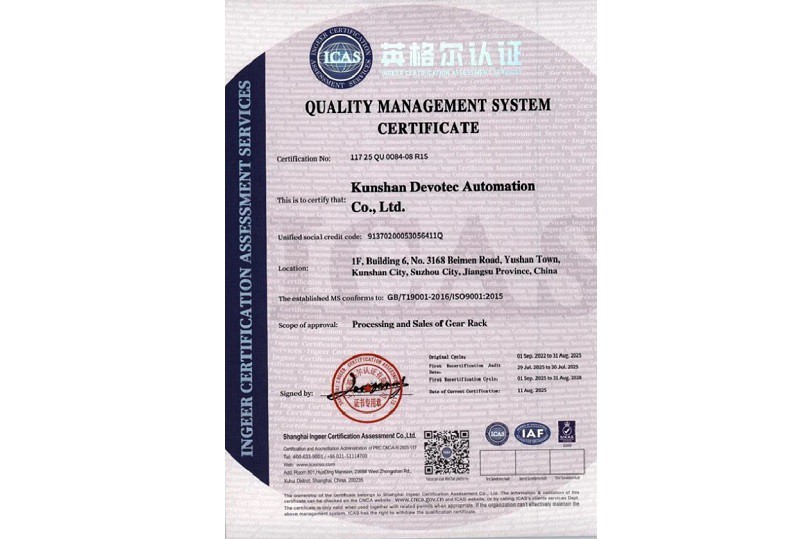
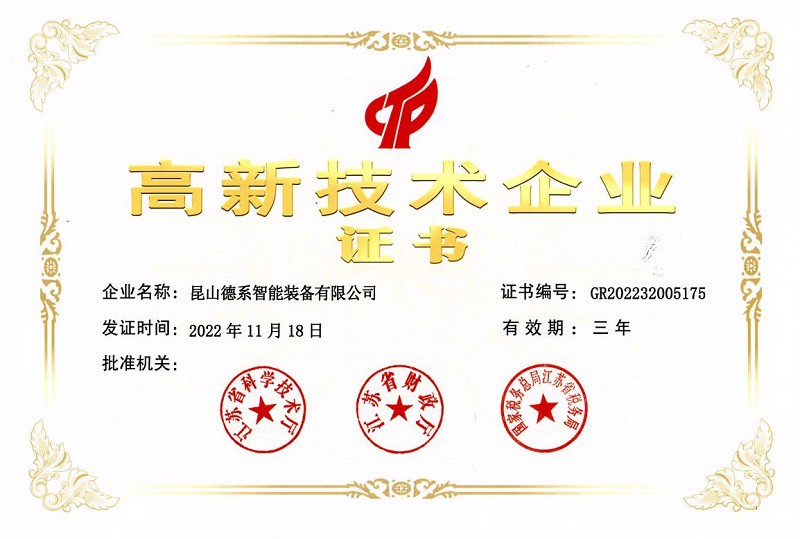
To ensure consistently high quality standards and DIN 5 and DIN 4 accuracy, we have invested heavily in high-precision inspection and testing equipment, including coordinate measuring machines (CMM), spectrometers, and flaw detectors. As a high-tech enterprise, we are ISO 9001 certified.
Specification
|
Product Name |
Gear Racks |
|
Material |
C45/42CrMo |
|
Pressure Angle |
20° |
|
Lengths |
500mm, 1000mm, 1500mm,2000mm or customizable. |
|
Module |
M1.5-M10 |
|
Tooth Type |
Helical Teeth Ground Racks , Straight Teeth Ground Racks |
|
Standard |
DIN、ISO |
|
Grade |
DIN 5-DIN 10 |
|
Heat treatment |
Quenching and tempering, carburizing and quenching |
|
Surface treatment |
Galvanized, chrome-plated, black oxide, zinc-plated |
High Precision: Due to the unidirectional motion of the gear racks, friction loss is small and position control precision is high. The gear teeth on the rack can mesh with the gears in the mechanical device to achieve precise positioning and control.
Large Transmission Power: The gear racks can withstand movement with a certain impact load, cooperate with the gear, and transmit power through the gear drive. At the same time, it can also realize movement through its own movement.
Smooth Movement: The meshing method of the gear rack makes it run smoothly, and the phenomenon of jumping is rarely caused. The change in speed will not affect its performance.
Low Noise: The surface finish is high, which can effectively reduce noise and quiet operation, which can meet the low noise requirements of machine operation.
High reliability
The gear rack is reliable in operation and has a long service life. It does not require regular maintenance and replacement. It also has good sealing performance, which can prevent dust, water vapor and other foreign objects from entering, thereby prolonging its service life.
Simple structure
The structure of the gear rack is relatively simple, the process is easy to grasp, and the manufacturing cost is relatively low. At the same time, the shape and size of the rack are relatively stable, which is easy for batch production and processing.
Wide application
Gear racks are widely used in various mechanical devices, such as CNC machine tools, lifting equipment, and iron and steel metallurgy equipment.
Applications of Gear Racks
In the Industrial Realm
Manufacturing Equipment: Gear racks drive the precise movement of components in machines like CNC routers and milling machines.
Automotive Systems: They are used in steering systems, allowing for the conversion of the steering wheel’s rotational movement into the linear motion needed to turn the wheels.
Everyday Life and Beyond
Construction: Heavy machinery, like cranes, use gear racks to ensure accurate, linear movement of loads.
Entertainment: In stage productions, gear racks help move scenery and props smoothly, enhancing the theatrical experience.
Precision Robotics: Facilitates accurate positioning in robotic arms and automated systems.

Types of Gear Racks
Straight Teeth Gear Racks
Straight teeth gear racks are perhaps the most common type of gear racks. The teeth on these racks are parallel to the axis of the rack, making them relatively simple to manufacture.The straight teeth design allows for straightforward meshing with spur gears. This type of rack is often used in applications where high - speed linear motion is required, such as in conveyor systems.
Helical Teeth Gear Racks
Helical teeth gear racks have teeth that are cut at an angle to the axis of the rack. This angled design offers several advantages over straight teeth gear racks.One of the main benefits of helical teeth is their ability to provide smoother and quieter operation compared to straight teeth. As the teeth engage gradually, the load is distributed more evenly across the teeth, reducing noise and vibration.
Double Pinion Gear Racks
Double pinion gear racks involve the use of two pinions working in conjunction with a single rack. This setup offers enhanced performance and control in certain applications.
Herringbone Gear Racks
Herringbone gear racks are a unique type that combines the features of helical teeth in a special way. The teeth on a herringbone gear rack are arranged in a V - shaped pattern, with two sets of helical teeth that slope in opposite directions.The main advantage of herringbone gear racks is that they cancel out the axial thrust that is typically generated by helical teeth.
Plastic Gear Racks
Plastic gear racks are made from various types of plastics, such as nylon, polycarbonate, and acetal. These racks offer several advantages over their metal counterparts.Firstly, plastic gear racks are lightweight, which can be beneficial in applications where weight reduction is a priority, such as in robotics and aerospace applications. They also have excellent corrosion resistance, making them suitable for use in harsh environments where metal racks would rust or corrode.
Cast Iron Gear Racks
Cast iron gear racks are known for their high strength and durability. Cast iron is a material that can withstand heavy loads and is resistant to wear and tear.These racks are commonly used in industrial applications where reliability and long - term performance are essential.
Installation and Maintenance of Gear Racks
Installation
Alignment: Ensure proper alignment of the gear rack to prevent misalignment issues.
Mounting: Securely mount the gear rack to the machine’s frame for stability and reliable operation.
Lubrication: Regularly lubricate the gear rack to minimize friction and ensure smooth movement.
Clearance: Maintain the appropriate clearance between the gear rack and meshing components.
Calibration: Calibrate the gear rack to ensure accurate and precise motion.
Maintenance
Regular Inspection: Periodically inspect the gear rack for any signs of wear, damage, or misalignment.
Lubrication Maintenance: Follow a regular lubrication maintenance schedule to keep the gear rack operating smoothly.
Tightening: Check and tighten any loose fasteners to maintain the integrity of the gear rack system.
Cleaning: Keep the gear rack clean from debris and contaminants to prevent interference with its operation.
Replacement: If necessary, replace worn or damaged gear rack components to ensure optimal performance.
Packaging and Shipping

1) Inner packing: rust-preventive oil application,vacuum packaging bag
2) Outer packing: wooden case or pallet
3) Customized packing is also available
4) Production Lead Time: 15-35 Days after approved
Our certificates
FAQ
As one of the leading gear racks manufacturers and suppliers in China, we warmly welcome you to buy high quality gear racks for sale here from our factory. For customized service, contact us now.