


Gear Boxes
Your Professional Gear Boxes Manufacturer!
Kunshan Devotec Automation Co., Ltd. was established in 2012, but its origins trace back to an initial investment by the German company WMH HERION in Qingdao, Shandong Province in 2007. Since then, we have accumulated extensive experience in engineering, manufacturing, and quality control. As a specialist in drive technology, Kunshan Devotec Automation focuses on the production of high-precision gear racks, gears, pinions, gearboxes, linear guideways, and other linear transmission components. The company also serves as a partner for several European manufacturers in China, including , Graessner, and Hönger, providing localized sales and after-sales services.
-
![Planetary Gear Reducer with Output Shaft]() Planetary Gear Reducer with Output ShaftA solid cylindrical shaft with keyways, threads, or flanges machined at the end, rigidly connected to loads via couplings or pulleys. Integrated gearbox and internal ring gear: compact,...read more
Planetary Gear Reducer with Output ShaftA solid cylindrical shaft with keyways, threads, or flanges machined at the end, rigidly connected to loads via couplings or pulleys. Integrated gearbox and internal ring gear: compact,...read more -
![RV Harmonic Reducers]() RV Harmonic ReducersHarmonic reducers feature a wide transmission ratio range, a large number of meshing teeth, high load‑carrying capacity, high precision, smooth operation, low noise, adjustable backlash, compact...read more
RV Harmonic ReducersHarmonic reducers feature a wide transmission ratio range, a large number of meshing teeth, high load‑carrying capacity, high precision, smooth operation, low noise, adjustable backlash, compact...read more -
![Planetary Gear Reducer with Flange Output]() Planetary Gear Reducer with Flange OutputDirect rigid connection to loads via a flange, eliminating the need for couplings and ensuring high concentricity. Integrated gearbox and internal ring gear: compact, high-precision, large output...read more
Planetary Gear Reducer with Flange OutputDirect rigid connection to loads via a flange, eliminating the need for couplings and ensuring high concentricity. Integrated gearbox and internal ring gear: compact, high-precision, large output...read more -
![Right-Angle Planetary Gear Reducer]() Right-Angle Planetary Gear ReducerIt adopts a planetary gear system combined with bevel gears/worm gears to achieve 90° right-angle steering, with a compact structure. All components are processed and assembled with high...read more
Right-Angle Planetary Gear ReducerIt adopts a planetary gear system combined with bevel gears/worm gears to achieve 90° right-angle steering, with a compact structure. All components are processed and assembled with high...read more -
![Hollow Rotary Platform Gear Reducer]() Hollow Rotary Platform Gear ReducerIt integrates a precision hollow structure with a high-rigidity rotary table, enabling 360° continuous rotation with high positioning accuracy (typically within ±5 arcseconds). Equipped with a...read more
Hollow Rotary Platform Gear ReducerIt integrates a precision hollow structure with a high-rigidity rotary table, enabling 360° continuous rotation with high positioning accuracy (typically within ±5 arcseconds). Equipped with a...read more -
![Worm Gear Reducer]() Worm Gear ReducerThe helical tooth meshing structure enables efficient power transmission with smooth operation and low noise. The worm's spiral design provides reverse self-locking to prevent equipment reversal...read more
Worm Gear ReducerThe helical tooth meshing structure enables efficient power transmission with smooth operation and low noise. The worm's spiral design provides reverse self-locking to prevent equipment reversal...read more


Why Choose Us
Our Factory
Our company boasts a factory area of approximately 5,000 square meters, with nearly all production processes performed in-house. This enables us to strictly control product quality and delivery times.
Advanced Equipment
Our company boasts advanced equipment such as machining centers, surface grinders, milling machines, straightening machines, and high-precision rack milling and grinding machines imported from KESEL and HABRAMA in Germany. These machines are among the world's leading. We also have our own heat treatment facilities, equipped with induction hardening, quenching and tempering machines, and case hardening equipment.
High Quality
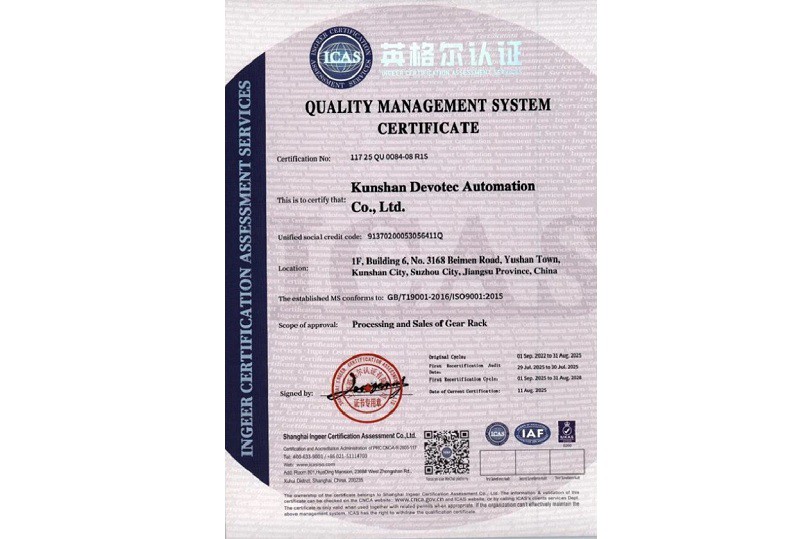
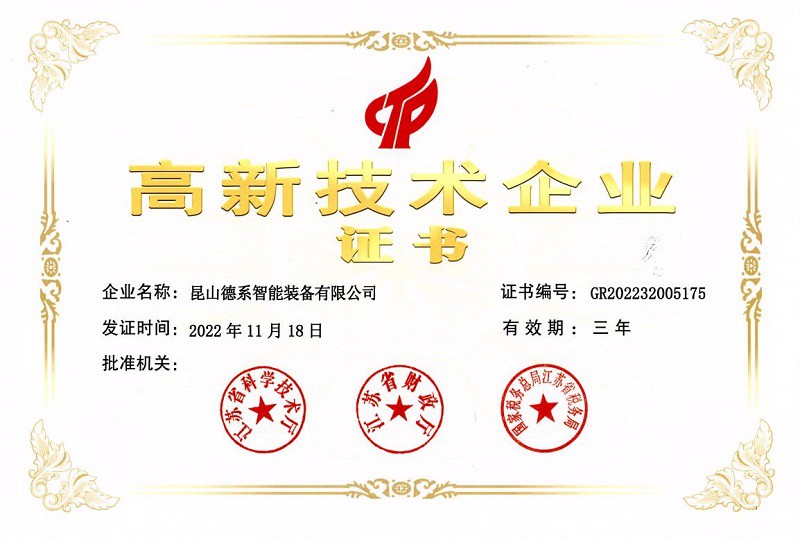
To ensure consistently high quality standards and DIN 5 and DIN 4 accuracy, we have invested heavily in high-precision inspection and testing equipment, including coordinate measuring machines (CMM), spectrometers, and flaw detectors. As a high-tech enterprise, we are ISO 9001 certified.
Specifications
|
Gear Boxes |
|
|
Structure |
Coaxial center shaft type, parallel shaft type, 90 degree right angle type |
|
Input power |
0.06KW ~ 8000 KW; |
|
Input speed |
750rpm 1000rpm 1500rpm 3000rpm at 50Hz, 900rpm 1200rpm 1800rpm 3600rpm at 60Hz |
|
Reduction ratio |
1/3.5 ~ 1/4000 |
|
Output torque |
3 ~ 900kN.m |
|
Install type |
Foot / Solid shaft / Hollow shaft / Output flange… |
|
Efficiency |
Single-stage 98%, 2-stage 96%, 3-stage 94%, 4-stage 92% |
|
Precision of gear |
Accurate grinding, class 6 |

Advantages of Gear Boxes
Speed and Torque Conversion
Gearboxes allow for the conversion of rotational speed and torque. By using different gear ratios, they can increase torque output at the expense of speed or vice versa. This is useful in various applications, such as vehicles, where different speeds and torques are required.
Power Transmission
Gearboxes efficiently transmit power from the prime mover to the driven machine. They allow power to be transmitted over longer distances without significant power losses, making them suitable for various industrial and automotive applications.
Load Distribution
Gearboxes distribute the load over multiple gears, which helps to reduce wear and tear on individual components. By spreading the load, they improve the overall reliability and lifespan of the transmission system.
Control and Versatility
Gearboxes provide control over the speed and output torque, allowing users to adapt the mechanical system to different operating conditions. This versatility makes gearboxes suitable for a wide range of applications, from small-scale machinery to heavy-duty industrial equipment.
Reverse Motion
Gearboxes enable reverse motion by changing the direction of rotation. This is crucial in many applications, such as vehicles, where reversing is necessary for parking, maneuvering, or changing direction.
Applications of Gear Boxes
Aerospace
In the aerospace industry, gearboxes are used in space and air travel, i.e. airplanes, missiles, space rovers and vehicles, space shuttles, and engines.
Agriculture
In the agriculture industry, gearboxes are used for plowing, irrigation, pest and insect control, tractors, and pumps.
Automotive
In the automotive and transportation industries, gearboxes are used in cars, helicopters, buses, and motorcycles.
Construction
In the construction industry, gearboxes are used in heavy machinery, such as cranes, forklifts, bulldozers, and tractors.
Food Processing
In the food processing industry, gearboxes are used in conveyor systems, the processing of meat and vegetable products, packaging applications, and more.
Shipping Industry
In the shipping industry, gearboxes are used in boats and yachts.
Medical
In the medical industry, gearboxes are used in surgical tables, patient beds, medical diagnostic machines, dental equipment, and MRI and CAT scan machinery.
Energy
In the energy industry, gearboxes are used in power plants, transformers, generators, and turbines.
Types of Gear Boxes
Planetary Gearboxes
Planetary gearboxes are widely used in industrial applications that require precise speed and torque control. The key feature of a planetary gearbox is its compact design, which allows for high power density. Planetary gearboxes are ideal for applications that require high accuracy and stability, such as robotics and printing presses.
Bevel Gearboxes
Bevel gearboxes, such as conveyors and material handling systems, are used in applications where the output direction needs to be changed. The design of bevel gearboxes makes them easy to manufacture, which reduces costs compared to other gearbox types.
Worm Gearboxes
Worm gearboxes are best used in applications where a compact design is needed and high torque output is required. They are widely used in heavy-duty applications, such as cranes and hoists.
Helical Gearboxes
Helical gearboxes are known for their smooth and quiet operation, making them ideal for applications where noise is a concern. They also have a high-efficiency rating, making them ideal for applications where energy consumption is a concern.
Spur Gearboxes
Spur gearboxes are reliable and inexpensive, making them ideal for applications where budget is a concern. They are widely used in light-duty applications, such as packaging and food processing.
Components of Gear Boxes
Gears
Gears come in a variety of shapes and sizes. No matter their intended use, all gears help transmit power between different motor shafts. Larger gears with more teeth have higher torque, yet lower overall output speeds.
Bearings
Bearings help support rotating shafts in motors. As such, bearings keep the shaft in place and help ensure that power is efficiently transferred across the system. There are many types of bearings used in different motors and gear drives—some being more complex than others.
Seals
Gearboxes are integrated with a variety of seals that help contain oil. Due to the heavy industrial applications of gear drives, seals also keep dirt, grime, and water from entering the gearbox and damaging the machine.
Packaging and Shipping


1) Inner packing: oil paper,polyethylene bag,box.
2) Outer packing: wooden case or pallet.
3) Customized packing is also available.
4) Production Lead Time: 15-35 Days after approved
Our certificates
FAQ
As one of the leading gear boxes manufacturers and suppliers in China, we warmly welcome you to buy high quality gear boxes for sale here from our factory. For customized service, contact us now.